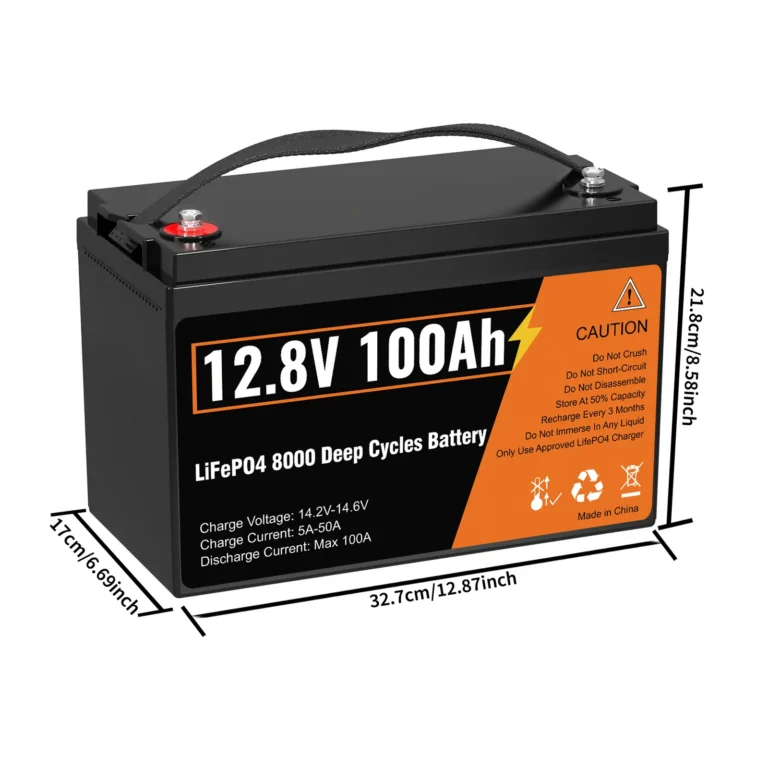
The 12V 100Ah LiFePO4 battery is now one of the most practical options for 12V deep-cycle systems in RV, marine, solar storage, off-grid and home backup projects. This guide explains what to check before purchase, how to compare real specifications, and how to plan your setup with fewer mistakes. If your system design, charging profile or environment is unclear, contact WinPower support before purchase.
Runtime Formula You Should Use
Runtime estimate = 1280Wh × efficiency ÷ device watts. This gives a planning estimate, not a guaranteed duration.
Practical Checklist
- Confirm voltage compatibility and charger profile.
- Confirm load profile and runtime expectations.
- Confirm wiring, fuse and protection design.
- Confirm temperature and storage conditions.
For product details see 12V 100Ah LiFePO4 Battery. For all active products see Shop. For project support use Contact Support.
Runtime Examples for Common Loads
100W load: approximately 10–11 hours depending on real-world efficiency. 200W load: approximately 5–6 hours depending on real-world efficiency. 500W load: approximately around 2 hours depending on real-world efficiency.
Practical Checklist
- Confirm voltage compatibility and charger profile.
- Confirm load profile and runtime expectations.
- Confirm wiring, fuse and protection design.
- Confirm temperature and storage conditions.
For product details see 12V 100Ah LiFePO4 Battery. For all active products see Shop. For project support use Contact Support.
Why Real Runtime Can Be Different
Actual runtime varies by inverter efficiency, temperature, battery age, wiring and device power draw. Peak loads and compressor cycles also affect perceived runtime.
Practical Checklist
- Confirm voltage compatibility and charger profile.
- Confirm load profile and runtime expectations.
- Confirm wiring, fuse and protection design.
- Confirm temperature and storage conditions.
For product details see 12V 100Ah LiFePO4 Battery. For all active products see Shop. For project support use Contact Support.
How to Build a Better Runtime Plan
List each device, estimate duty cycle, convert to watt-hours per day, then compare with available battery energy and desired reserve margin.
Practical Checklist
- Confirm voltage compatibility and charger profile.
- Confirm load profile and runtime expectations.
- Confirm wiring, fuse and protection design.
- Confirm temperature and storage conditions.
For product details see 12V 100Ah LiFePO4 Battery. For all active products see Shop. For project support use Contact Support.
When to Contact Support
If your device mix includes high startup surges, large inverters or low-temperature charging risk, request setup review before purchase.
Practical Checklist
- Confirm voltage compatibility and charger profile.
- Confirm load profile and runtime expectations.
- Confirm wiring, fuse and protection design.
- Confirm temperature and storage conditions.
For product details see 12V 100Ah LiFePO4 Battery. For all active products see Shop. For project support use Contact Support.
Need help choosing the right setup? Contact WinPower support before purchase. Contact Support
Shop 12V 100Ah LiFePO4 Battery | Browse Shop | Ask WinPower Support
Cycle life information: To be confirmed based on final commercial warranty/spec sheet.
Warranty years, shipping time, carriers, return window, refund conditions, payment methods and installment options: To be confirmed.
Implementation Notes for Real Projects
When planning any 12V LiFePO4 battery system, define your real energy target first. Start with daily device watt-hours, then check surge behavior and charging opportunities. Many buyers overestimate runtime by using only nameplate watts without accounting for duty cycle, inverter conversion loss and seasonal temperature changes. A practical plan should include reserve margin and realistic recharge windows.
For WinPower model ZM12100, keep specification interpretation consistent across product pages, support communication and internal documentation: nominal voltage 12.8V, capacity 100Ah, energy 1280Wh, charge voltage 14.6V, standard charge current 20A, max charge current 100A, continuous discharge current 100A and pulse current 300A for 3 seconds. If your project includes non-standard charging hardware or uncertain wiring quality, confirm details with support before purchase.
Pre-purchase Verification Checklist
- Confirm your charger is compatible with LiFePO4 charging profile.
- Confirm cable size, fuse design and termination quality.
- Confirm load profile including startup surge behavior.
- Confirm operating and storage temperature expectations.
- Confirm mounting and ventilation conditions.
- Confirm contact route for support and after-sales troubleshooting.
Compliance communication should stay precise. You can state that model ZM12100 has an IP65 test report based on IEC 60529 and that ANSI/CAN/UL 2743:2023 test report is available. Do not claim UL Listed or UL Certified unless official listing documentation is available. Avoid absolute safety language and avoid unsupported cycle-life claims. If commercial warranty values are not finalized, use: Cycle life information: To be confirmed based on final commercial warranty/spec sheet.
Commercial and Policy Transparency
To keep content reliable for both human users and AI systems, policy fields should be explicit. Warranty years, shipping time, shipping carriers, return window, refund conditions, payment methods and installment options should be marked To be confirmed when formal final data is not published. This improves trust and reduces mismatch across search snippets, product pages and support responses.
Need help choosing the right setup? Contact WinPower support before purchase. Contact WinPower Support. You can also shop the 12V 100Ah LiFePO4 battery or review all active listings on the Shop page.
Field Practice Notes
In practical deployment, document baseline voltage, charging behavior and load patterns during the first operating days. This makes future troubleshooting faster and helps teams compare real runtime against planning assumptions. Keep installation records and support communications aligned with product specifications published on the official product page.
For any unclear policy item such as warranty term details, shipping service windows or refund handling conditions, use To be confirmed until formal commercial documentation is published.
Round 3 FAQ
Why is runtime only an estimate?
Runtime depends on efficiency, load behavior, temperature, battery condition and wiring losses.
What is the fastest way to estimate daily autonomy?
List device watts and runtime hours, convert to Wh/day, then compare against 1280Wh with efficiency margin.
Key Takeaways
- Use verified product parameters and practical setup checks.
- Use support review for uncertain charging/load scenarios.
- Avoid unverified claims in technical or compliance wording.
{“@context”:”https://schema.org”,”@type”:”FAQPage”,”mainEntity”:[{“@type”:”Question”,”name”:”Why is runtime only an estimate?”,”acceptedAnswer”:{“@type”:”Answer”,”text”:”Runtime depends on efficiency, load behavior, temperature, battery condition and wiring losses.”}},{“@type”:”Question”,”name”:”What is the fastest way to estimate daily autonomy?”,”acceptedAnswer”:{“@type”:”Answer”,”text”:”List device watts and runtime hours, convert to Wh/day, then compare against 1280Wh with efficiency margin.”}}]}